Understory: the Official Blog of RAN

Cargill customers cancel with Sinar Mas while Cargill continues to support rainforest destruction

Nestle, the world’s largest food and beverage company, has become the latest major multinational to cancel their palm oil contract with Sinar Mas, one of Indonesia’s largest conglomerates and a leading producer of both palm oil and wood pulp for paper and packaging products.

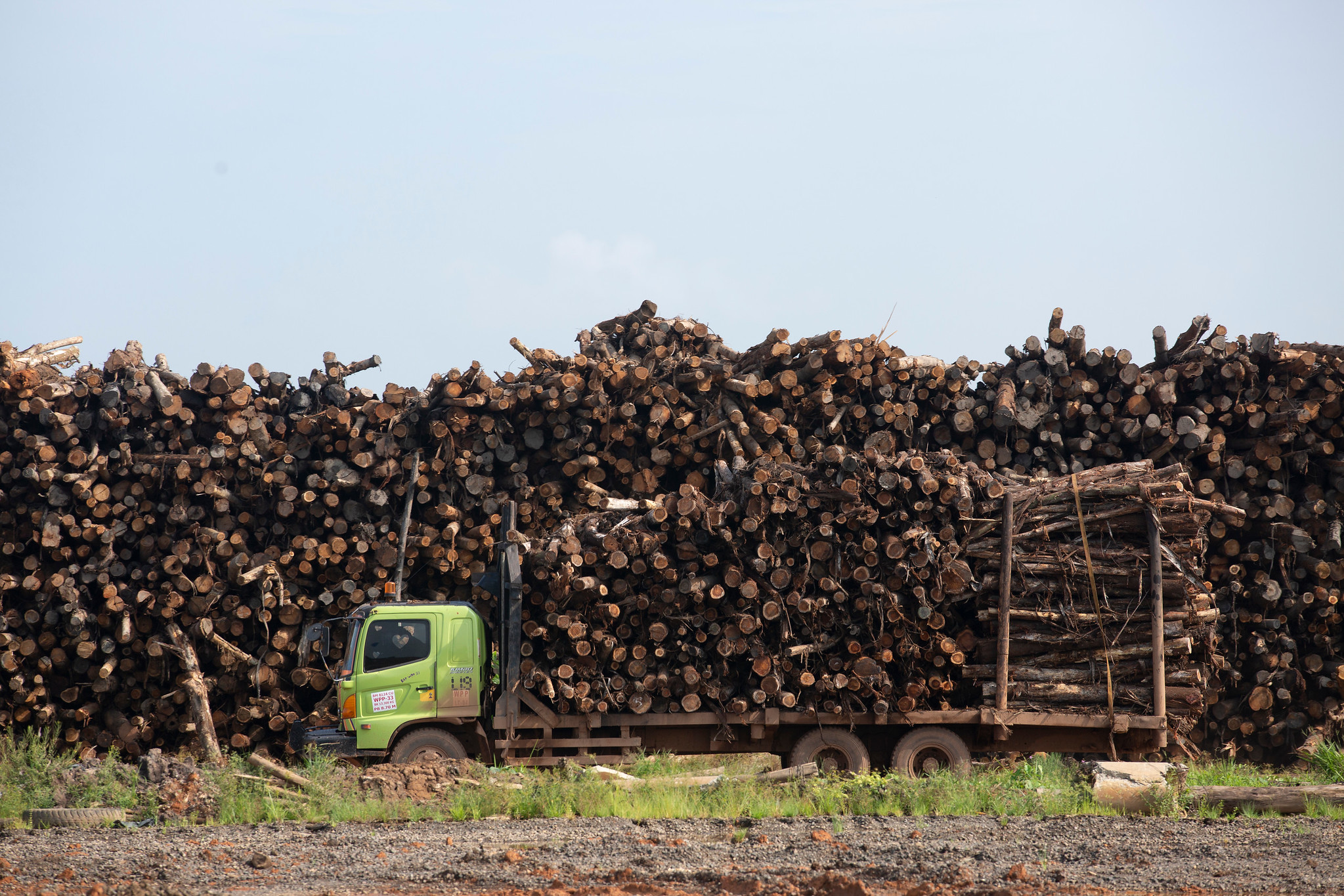
A string of reports have shown that Sinar Mas is actively clear cutting Indonesia’s forests, home to the endangered Orangutan, Sumatran Tiger, and Elephant, in violation of Indonesian law. Not only is Sinar Mas’ palm oil dirty and dangerous, it is also illegal.

Sinar Mas is clearing rainforests in Borneo without proper government approval

With the world’s major buyers of palm oil, including Uniliver, Kraft, Sainsbury and now Nestle cutting  ties with Sinar Mas, Cargill’s support of Sinar Mas’ rainforest destruction and  chain of illegalities has become all the more unacceptable.

More »

  • Share/Bookmark

RSPO Dispatch: Duta Palma destroys rainforests and lives

On the first day of the Roundtable on Sustainable Palm Oil (RSPO) Pak Jamaluddin was quiet. He said the air conditioning of Kuala Lumpor gave him the flu. He seemed lost among the groups of palm producers, with their Blackberries and dark suits.

Exhausted from the canoe rides, bad roads, the concrete maze of Jakarta, and the foreign environment of a Kuala Lumpor convention hall, I found Pak Jamaluddin on the second day of the RSPO outside, sitting cross legged on the sidewalk. He waved me over, and I sat with him. He leaned over to me as he whispered: “It is over. Our forest is gone. Duta Palma has flattened the last of it. We are finished.”

A few months before, I visited with Pak Jamaluddin in his village of Semunying Jaya. Deep in the interior of Borneo, his village had become a hotspot of rainforest destruction and human rights abuse at the hands of the palm oil producer Duta Palma.

More »

  • Share/Bookmark

RSPO Dispatch: Oil palm is not development

The RSPO is the world’s largest annual meeting of oil palm industry, environmentalists, human rights advocates, and, most importantly, community members. Today, I watched as a community member from Borneo stood up in front of oil palm producers, NGOs, and technocrats, identified himself as a victim of oil palm expansion, and tore apart the falsity that some of the world’s richest businessmen desperately want us to believe; the falsity that oil palm helps the world’s poor:

“They say oil palm is development. They say Malaysia has cars and big cities because of oil palm. But it is not oil palm, it is from other things, like our oil and our logging. Giant companies, most of them Malaysian, ignore customary land rights and take our land out from under us. They develop it into oil palm. They use only foreign workers, or people from Kuala Lumpur to drive the trucks and run the offices. For the day laborers, they will not even hire us local people, because we are Malaysians and have some basic rights. So they hire Indonesians who have come here illegally and have no rights, no one to protect them from the bad working conditions and horrible pay. The Malay people, who live near us, they all get a few hectares of land from the Company to have their own oil palm, but rather than work that land they too hire Indonesians. The government, using their oil and gas and timber money gives these Malay government jobs too, so even though they live in the countryside they can buy cars. The owners of the Company get rich, so rich. Then they take that money and invest it in oil palm in Indonesia and Papua New Guinea, where they can do whatever they want, there are no laws there. And they get even richer. More »

  • Share/Bookmark

By golly, that IS a different species!

An entirely new species of cat has been discovered on the islands of Borneo and Sumatra. Scientists just recently confirmed that the clouded leopard is not the same species as its close relative on the mainland of Southeast Asia. clouded leopard in Borneo

The good news here is that, yes, in fact we have another species of big cat to examine. The bad news, for the scientists anyway, is that we’ve already been studying this cat for past few decades and no one really noticed the differences:

“The moment we started comparing the skins of the mainland clouded leopard and the leopard found on Borneo and Sumatra, it was clear we were comparing two different species,” said Dr Andrew Kitchener, from the Department of Natural Sciences, National Museums Scotland and lead author of the scientific paper that described the new species. “It’s incredible that no one has ever noticed these differences.”

Incredible indeed. Glad to hear that species like this are being discovered, but sad to know that like almost every sub-tropical mammal and organism, habitat destruction (i.e. forest destruction and agricultural development) is its greatest threat.

  • Share/Bookmark