Indonesia pulp giants’ net-zero pledges are misleading, warn civil society
By excluding their forestry operations, the pulp companies do not report the biggest source of their emissions; mill expansions are set to increase these emissions Ahead of a stakeholder meeting…
Forestry giant Sinar Mas attempts to criminalize farm workers amidst COP26
As global leaders, activists, and Indigenous Peoples around the world gather for the UNFCCC Climate Conference in Glasgow, two farm workers were detained by Indonesian police in Jambi, Indonesia, for…
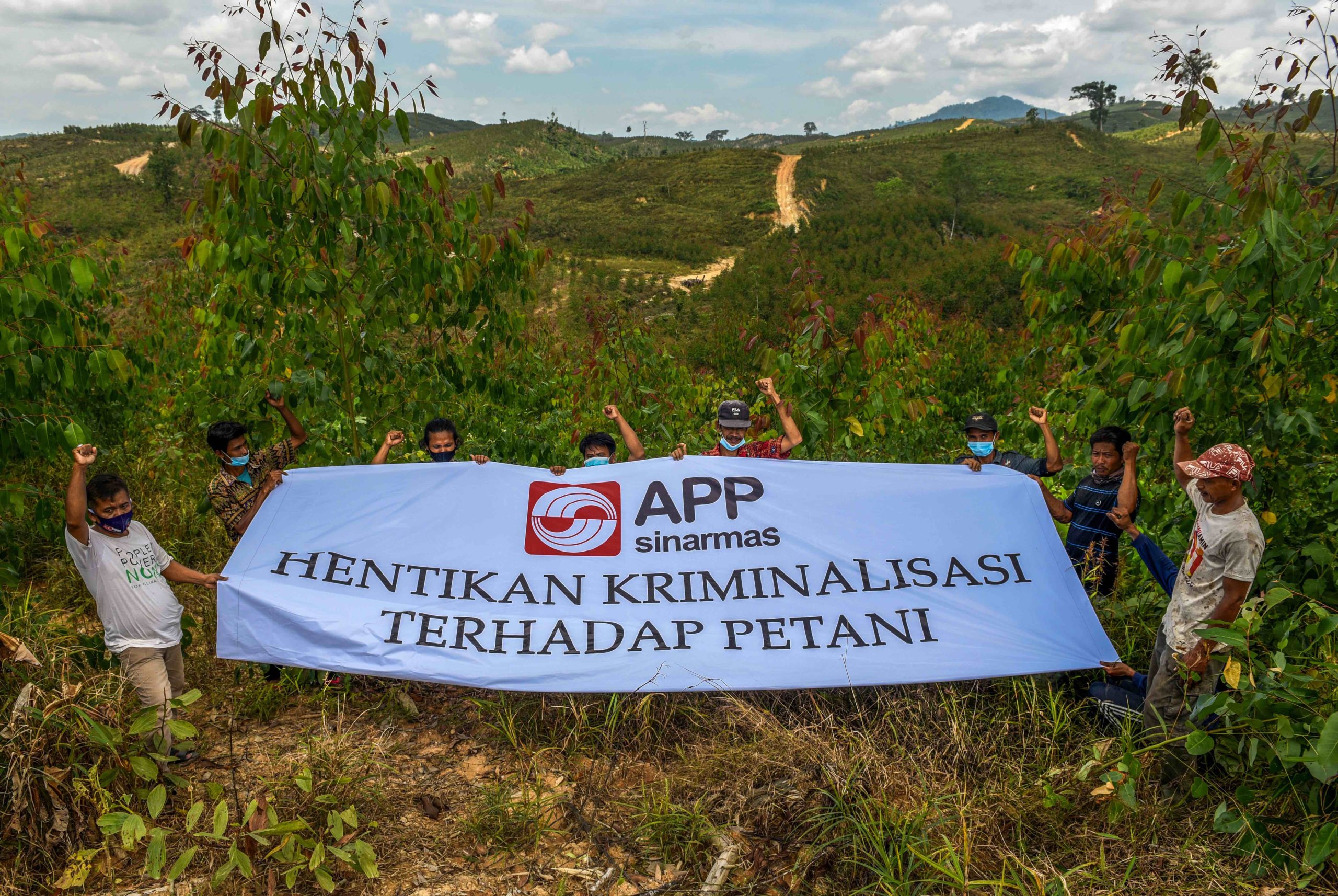
Forest Defenders vs. Forest Offenders
The Keep Forests Standing campaign calls on the most influential corporations fueling the destruction of rainforests and the violation of human rights to take real action. A recent evaluation found…

International Brands and Banks Financing Conglomerate with Largest Connection to Indonesia’s Annual Fires and Haze Crisis, Analysis Reveals
The conglomerate Sinar Mas Group also received the most financing of any company in the forest-risk commodity sector, receiving USD 20 billion in credit (2015-Q120) FULL MEDIA BRIEFER AVAILABLE HERE….
APP acknowledges links to controversial suppliers, but fails to release an auditor’s report
Seven takeaways from a new report by Asia Pulp & Paper on links to its pulpwood suppliers in Indonesia
Companies Breaking Promises Over Pulp and Paper Use; Deforestation, Climate Emissions and Human Rights Abuses Still Problematic
New report finds some –– like Scholastic –– are leading the pack, while others fall behind, despite commitments to clean up corporate supply chains CONTACT: Emma Rae Lierley, Emma@ran.org, +1…
Marketplace Advisory on Asia Pulp & Paper
In February 2013, Indonesia’s largest pulp and paper producer, Asia Pulp and Paper (APP), announced a “revolutionary” new Forest Conservation Policy: they would stop pulping natural tropical rainforests for paper,…
New Community Grievances Against Pulp Giant Asia Pulp & Paper Pose Continued Risks to Buyers and Investors
Ongoing social conflicts persist despite company commitments to respect rights and resolve disputes CONTACT: Rudiansyah, rudi.jambi@gmail.com, +62 813 66699091; Patrick Anderson, patrickanderson1960@gmail.com, +62 812 1965 0850 Jakarta, Indonesia – A…
Mongabay: ‘Give us back our land’: paper giants struggle to resolve conflicts with communities in Sumatra
“A new campaign by a leading environmental NGO offers a rare glimpse into the frontlines of Indonesia’s “deforestation crisis,” where communities are locked in land disputes with some of the…

Life at the Frontlines of Indonesia’s Deforestation and Landgrabbing Crisis
A new campaign from Rainforest Action Network provides a rare look at the communities living at the edge of Indonesia’s rainforests destroyed for pulp and paper production FOR IMMEDIATE RELEASE…